Crickx
UK7 APR 2026

Hundreds Assemble for Dissident Republican Easter Parade in Londonderry

Young demonstrators brandished petrol bombs as the march reached the City Cemetery, raising security concerns.

Dissident republican Easter parade moving through Londonderry streets
Members of the parade walk past onlookers during the Easter commemoration.
Londonderry, Northern Ireland

Background to the Commemoration

Each year, various groups stage marches to mark the anniversary of the 1916 Easter Rising, an event that remains a potent symbol in Irish republican history. In the most recent iteration, a dissident republican faction organised a sizeable march that began in the suburb of Creggan and proceeded toward the historic City Cemetery in the centre of Londonderry. The organising body, identified as Saoradh, has previously been linked by the Police Service of Northern Ireland to the New IRA, a designation that underscores the heightened scrutiny surrounding the event.

The Parades Commission, the statutory authority responsible for regulating public processions in Northern Ireland, issued a determination ahead of the march. The determination explicitly warned that participants must refrain from wearing paramilitary‑style clothing and from displaying any illegal flags. Despite this clear guidance, the march proceeded in a manner that directly contravened the stipulated rules.

Details of the March Route and Participants

On Monday, several hundred individuals gathered at the starting point in Creggan. Among the crowd were participants dressed in combat‑style uniforms and a number of persons whose faces were concealed by masks or other coverings. The procession was led by a contingent of eighteen marchers clad in paramilitary‑style attire, a visual element that directly breached the Parades Commission’s prohibition on such dress.

The march proceeded along a designated route that took the participants from Creggan to the City Cemetery. At the outset, the procession paused briefly at the republican monument situated within Creggan, where a man clad in paramilitary‑style clothing placed a wreath as a symbolic act of remembrance. This brief interlude highlighted the overt political messaging embedded within the march.

According to the Saoradh national committee, the event was planned to feature one flute band and to involve approximately five hundred participants and supporters. The organisational statement also emphasized a desire to demonstrate continuity with the historic Easter Rising, albeit through a modern lens that resonates with dissident republican sentiment.

Security Concerns and Police Response

The Police Service of Northern Ireland reported a series of incidents that unfolded concurrently with the march. Chief Superintendent Gillian Kearney of the Police Service of Northern Ireland disclosed that a live investigation remains underway, focusing on potential breaches of both the Terrorism Act 2000 and the Parades Commission determination.

During the progression of the march, the Police Service of Northern Ireland confirmed that a vehicle had been set alight on Central Drive in Creggan. In response to the fire, the Police Service of Northern Ireland issued an advisory to the public, urging residents to avoid the immediate vicinity of Central Drive and to seek alternative routes when traveling through the area.

When the procession reached the City Cemetery, onlookers observed roughly twelve young individuals wearing masks and displaying petrol bombs. The presence of these incendiary devices heightened tension and prompted a rapid escalation of police activity surrounding the cemetery grounds.

Chief Superintendent Gillian Kearney reiterated the Police Service of Northern Ireland’s commitment to investigating any offences that arise from the march, stating: “The outcomes of our investigations from previous years illustrate that where offences occur, the Police Service of Northern Ireland will investigate fully.” This statement underscores the ongoing dedication of the Police Service of Northern Ireland to enforce the law, even in the context of politically charged public demonstrations.

Historical Context of Related Violence

The current march bears a stark resemblance to an incident that occurred in the previous year. At that time, similar dissident republican celebrations escalated into violence, with rioters hurling approximately fifty petrol bombs at police officers positioned near the historic city walls. The recurrence of such tactics, including the use of petrol bombs, signals a persistent pattern of confrontation associated with these types of commemorative processions.

Both the present and past incidents have drawn criticism from community leaders, security analysts, and political figures who argue that the deployment of paramilitary symbolism and the active use of incendiary devices serve only to inflame sectarian divisions. The Parades Commission’s explicit warning against paramilitary‑style clothing and illegal flags reflects an institutional effort to mitigate such tensions, an effort that appears to have been disregarded in the present march.

Official Statements and Community Reaction

In a formal press brief, Chief Superintendent Gillian Kearney of the Police Service of Northern Ireland outlined the investigative steps being taken. The statement emphasized that any individuals observed wearing paramilitary‑style uniforms could be committing an offence under the Terrorism Act 2000, in addition to breaching the Parades Commission determination. The Police Service of Northern Ireland therefore positioned itself to pursue legal action against any identified offenders.

Community members in Creggan expressed a mixture of concern and frustration. While some participants claimed that the march represented a legitimate form of cultural expression, others voiced unease about the overt display of militarised attire and the potential for violence that accompanied the presence of petrol bombs. Local residents were urged by the Police Service of Northern Ireland to remain vigilant and to report any suspicious activity to the nearest police station.

Saoradh, the organising political party, defended the march as a peaceful tribute to the 1916 Easter Rising. In statements released to the media, Saoradh reiterated its commitment to honouring the historic event without resorting to violence, despite the observable presence of petrol bombs among a small subset of participants. Saoradh also highlighted the inclusion of a single flute band as a nod to traditional Irish musical heritage.

#news#uk
Share this story

Recommended Stories

How My Heart Attack Turned a Red Bench into a Lifelong Reminder
UK|9 APR 2026

How My Heart Attack Turned a Red Bench into a Lifelong Reminder

Faith Harrison, a 24‑year‑old from Little Minsterley, survived a seven‑hour heart attack that struck her at just 22. The episode was caused by two hidden congenital heart defects, and emergency surgery saved her life by clearing a clot that blocked most of an artery. In the wake of this ordeal, Faith, a former personal trainer and weightlifter, opened her own Pilates studio and became the face of a bright red bench installed by the British Heart Foundation near Shrewsbury’s English Bridge. The bench, part of a nationwide campaign of 65 new benches celebrating the charity’s 65th anniversary, carries a gold plaque dedicated to Faith’s living memory and aims to spark conversations about heart health across the UK. Faith hopes the bench will encourage people to live boldly, confront discomfort, and speak openly about cardiovascular conditions, especially since many patients feel judged or embarrassed about their illnesses. Her story also highlights the stigma that can follow when a young, fit individual suffers a heart attack, as she faced unfounded accusations of drug use. By turning personal pain into public education, Faith seeks to make living feel like a luxury worth protecting for everyone.

How I Heard About Russia’s Submarine Stint Near the UK – A Personal Take on the Gugi Saga
UK|9 APR 2026

How I Heard About Russia’s Submarine Stint Near the UK – A Personal Take on the Gugi Saga

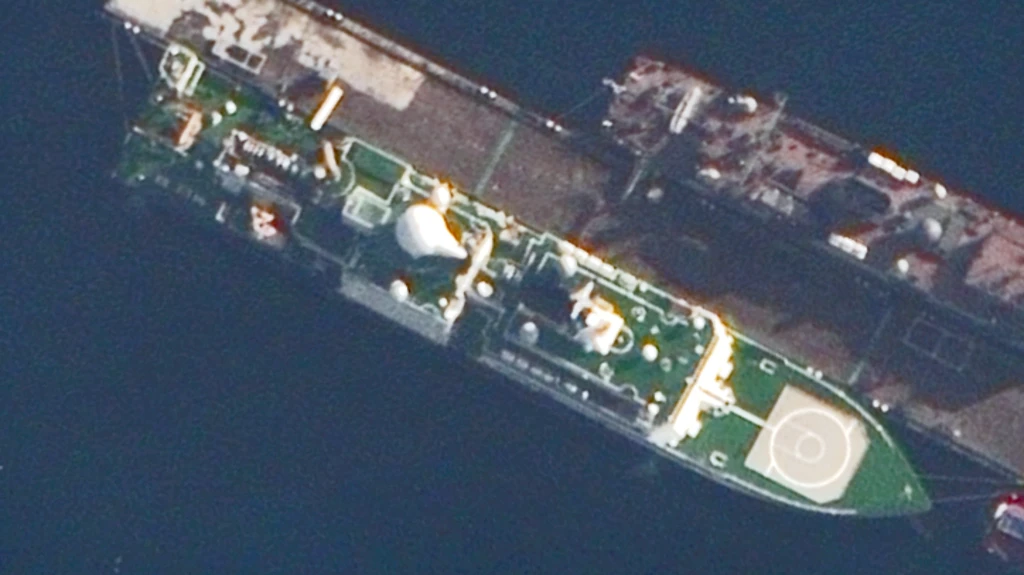
In a candid conversation with Defence Secretary John Healey, I learned about a month‑long operation by three Russian submarines from the Main Directorate for Deep‑Sea Research, popularly known as Gugi. These specialist vessels, part of Russia’s deep‑sea research programme, prowled the Atlantic waters north of the United Kingdom, keeping a watchful eye on undersea cables and pipelines. John Healey explained that the British armed forces monitored the Russian fleet around the clock, noting that all three submarines eventually turned back without causing any damage. The story also highlighted the Losharik – a uniquely designed submarine capable of diving over 2.5 km – and the surveillance ship Yantar, which was previously seen lingering near critical UK infrastructure. The piece offers a vivid, ground‑level perspective on the covert undersea cat‑and‑mouse game, the strategic importance of submarine‑friendly infrastructure, and the wider implications of such naval activities for global security, all narrated in a conversational Indian English style.

DUP MLA Gary Middleton Resigns Over Significant Mental Health Challenges
UK|9 APR 2026

DUP MLA Gary Middleton Resigns Over Significant Mental Health Challenges

Gary Middleton, the Democratic Unionist Party representative for the Foyle constituency, announced his decision to step down from the Northern Ireland Assembly after confronting a period of serious mental health difficulty. In a candid statement, Gary Middleton explained that a recent bout of ill‑health had severely limited the ability to serve constituents effectively and that continued public duties would impede the path to full recovery. The decision comes after a decade of service at Stormont, including a brief tenure as a junior minister and earlier experience as a local councillor. DUP leader Gavin Robinson paid tribute to Gary Middleton, highlighting a reputation built on steadfast representation of the city of Londonderry and surrounding areas, as well as a consistent defence of unionist values despite occasional threats. Gary Middleton’s resignation triggers a seven‑day window for the Democratic Unionist Party to select a replacement MLA for the Foyle seat. Throughout the announcement, Gary Middleton emphasised the importance of seeking help, encouraged others facing similar struggles, and expressed gratitude to colleagues across the political spectrum. The announcement underscores both the personal challenges of mental health in public life and the procedural steps that follow a resignation within the Northern Ireland Assembly.

Arrest Made in Decades‑Old Murder of Leeds Tycoon John Luper
UK|9 APR 2026

Arrest Made in Decades‑Old Murder of Leeds Tycoon John Luper

More than two decades after a violent burglary left Leeds entrepreneur John Luper dead, West Yorkshire Police have taken a 55‑year‑old Bradford resident into custody on suspicion of murder. The fatal incident unfolded when masked intruders attacked John Luper while he was walking his dog, dragged him to his home in Alwoodley, and restrained John Luper’s wife, John Luper’s daughter and John Luper’s au pair with duct tape. The thieves absconded with cash, jewellery and a rare Cartier timepiece valued at roughly £100,000. Despite frantic attempts by John Luper’s wife and John Luper’s daughter to revive John Luper after he was found in a downstairs room, medical responders could not save John Luper, who died from asphyxiation. The investigation, now bolstered by fresh forensic analysis, led to the recent arrest. Det Supt Damian Roebuck reiterated West Yorkshire Police’s commitment to securing justice for John Luper’s family and urged anyone with knowledge of the case, including possible inquiries into John Luper’s business affairs at the time, to come forward. The development marks a significant step forward in a cold case that has lingered in the public consciousness for over twenty years.

Steve Wainwright’s Supersized Home: Retiree Crafts Colossal Everyday Objects
UK|9 APR 2026

Steve Wainwright’s Supersized Home: Retiree Crafts Colossal Everyday Objects

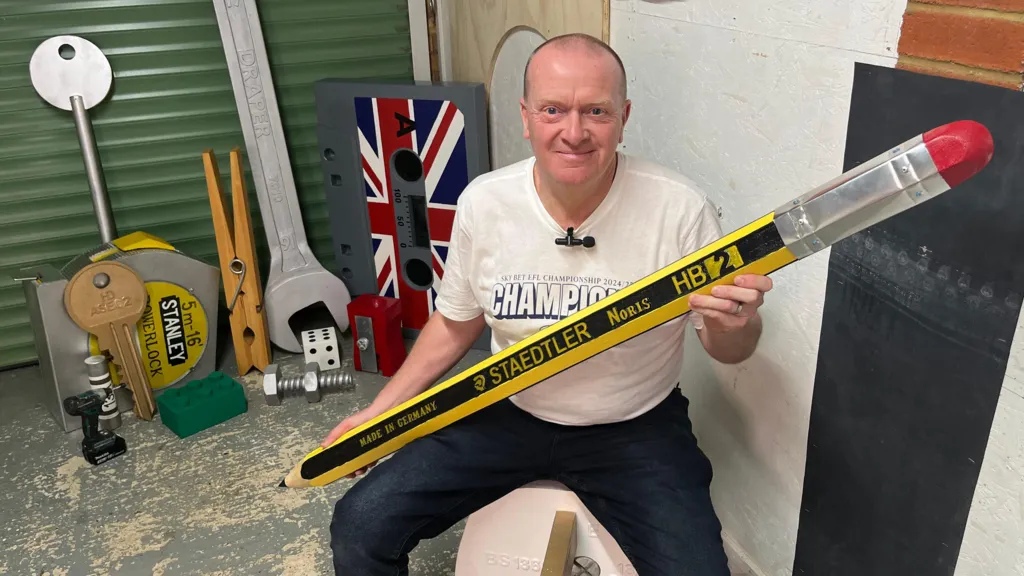
Steve Wainwright, a retired engineer from Peterborough, has turned his post‑work life into an extraordinary hobby by building gigantic replicas of ordinary household items. Living with his wife, Cat Thompson, Steve Wainwright surrounds himself with oversized creations that include a pencil the size of a fence post, a clothes peg taller than a child, a massive audio cassette, and a 13‑amp plug that doubles as a cupboard. Drawing on a background in engineering and electrics, Steve Wainwright designs each piece to be ten times larger than the original, using wood, metal and plastic, and spends up to two weeks on each project. The total investment in materials approaches £2,500, and a garden workshop that Steve Wainwright built with his own hands serves as the production hub. Some of the colossal objects have found new life as functional furniture, such as a tape measure turned coffee table, while others are sold locally through word‑of‑mouth referrals. Cat Thompson appreciates the creative outlet, noting that Steve Wainwright’s projects keep him occupied and out of mischief. This unique venture illustrates how retirement can inspire inventive pursuits that blend craftsmanship, imagination, and a playful re‑interpretation of everyday life.

RSPCA Uncovers Over 250 Dogs Crammed Into Single Home, Denies AI Image Claims
UK|9 APR 2026

RSPCA Uncovers Over 250 Dogs Crammed Into Single Home, Denies AI Image Claims

The Royal Society for the Prevention of Cruelty to Animals (RSPCA) has revealed a startling rescue operation in which more than 250 poodle-cross dogs were discovered living together in a single dwelling across the United Kingdom. The animal welfare charity highlighted that the sheer number of dogs and the deteriorating conditions they endured were the result of escalating family pressures that had spiraled out of control. In response to widespread speculation on social media, RSPCA clarified that a shocking photograph taken by a rescue worker, which shows dozens of dogs packed tightly into a living room, was not created by artificial intelligence but depicts the genuine reality of the situation. The incident underscores a broader trend of multi‑animal cases that have risen dramatically, with the charity reporting a 70 percent increase in such incidents across England and Wales since 2021 and noting that it has responded to 4,200 cases involving ten or more animals in the past year alone. Dogs rescued from the home were transferred to several regional centres, including facilities in Hertfordshire, Surrey, Norfolk, and Nottinghamshire, where they are now awaiting rehoming. Two of the rescued dogs, Stevie and Sandy, have been placed at Southridge Animal Centre and are awaiting adoption, with Stevie requiring a companion guide dog due to blindness and deafness. This comprehensive account details the scale of the rescue, the condition of the animals, the official response from RSPCA, and the ongoing efforts to provide permanent homes for the rescued dogs.