ICC Rule On Obstructing The Field Explained: Was Angkrish Raghuvanshi Given Out Fairly?
In light of Angkrish Raghuvanshi's rare and controversial dismissal against LSG, we dive into the technicalities of Law 37 and whether the KKR batter was a victim of a harsh interpretation.
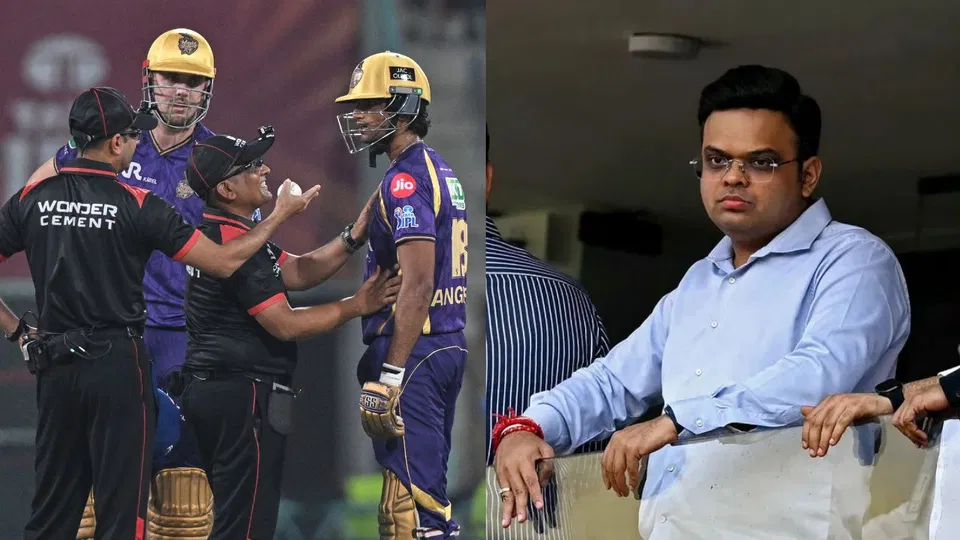
The Ekana Stadium witnessed a rare flashpoint in IPL 2026 history last night during the clash between Lucknow Super Giants (LSG) and Kolkata Knight Riders (KKR). Angkrish Raghuvanshi became just the fourth player in the 19-year history of the league to be given out for 'obstructing the field,' sparking a massive debate over the interpretation of the ICC’s laws.
The KKR youngster, who had just begun to steady the innings, found himself at the center of a storm when a desperate dive back to his crease ended in a red light from the third umpire. With the cricketing world divided, the incident has highlighted the fine line between athletic survival and illegal interference.
The Incident: A Split-Second Decision
Off the bowling of Prince Yadav, Raghuvanshi pushed the ball toward mid-on and took off for a single, only to be sent back by the non-striker. As he turned and dived to make his ground, Mohammed Shami’s throw struck him on the body. While the KKR camp looked on in disbelief, the LSG fielders appealed immediately.
Third umpire Rohan Pandit scrutinized several replays before concluding that Raghuvanshi had significantly altered his path, thereby impeding the ball’s journey to the stumps. But was it a deliberate move, or a natural byproduct of a high-speed turn?
Law 37.1.4: Intent vs. Action
In the past, 'obstructing the field' required the umpire to prove 'wilful intent.' However, modern ICC regulations have been adjusted to provide more objective criteria. Under Law 37.1.4, an umpire can rule a batter out if they feel the runner has significantly changed direction without "probable cause" and obstructed a run-out attempt.
Umpire Rohan Pandit focused on two objective questions: Did Raghuvanshi change direction, and was there a valid reason for that path? By sticking to the strict letter of the law, Pandit removed the burden of 'reading the batter’s mind' and focused solely on the physical trajectory, leading to the controversial dismissal.
"For the avoidance of doubt, if an umpire feels that a batsman has significantly changed his direction without probable cause and thereby obstructed a fielder's attempt to effect a run-out, the batsman should, on appeal, be given out," the ICC rule states.
Expert Verdict: Anil Chaudhary Weighs In
The decision hasn't sat well with everyone. Senior Indian umpire Anil Chaudhary suggested that the call might have been too harsh. Speaking on the nuances of the law, Chaudhary noted that real-time perception often differs from slow-motion replays, which can make natural movements look more calculated than they are.
“If you watch it in a replay, you might feel it is obstruction, but in real-time, you form a better opinion. It is an opinion call. I personally felt 'not out' was a better call. This is Law 37, and it ultimately comes down to interpretation,” Chaudhary remarked.
As Raghuvanshi walks away with a fine and a demerit point for his post-dismissal reaction, the debate continues: Did he break the rules, or did the rules break the spirit of the game?