Retired Soldier Ties and Beats 4‑Year‑Old Over Guava in Himachal’s Una – Viral Clip Sparks Nationwide Outcry
A retired army man in Una, Himachal Pradesh, restrained and assaulted a four‑year‑old girl after she plucked a guava from his garden. A circulating video ignited public fury and prompted swift police and child‑welfare action.
Background of the Incident
The village of Bahdala, nestled in the district of Una in Himachal Pradesh, became the focal point of a harrowing incident that has since unfolded across the nation’s digital landscape. The central figures in this episode are a retired army man, a four‑year‑old girl, and a local resident named Rohit Jaiswal. The retired army man, a former serviceman whose identity is tied solely to his past military service, owned a modest garden that bore fruit trees, one of which produced guavas that often attracted curious onlookers.
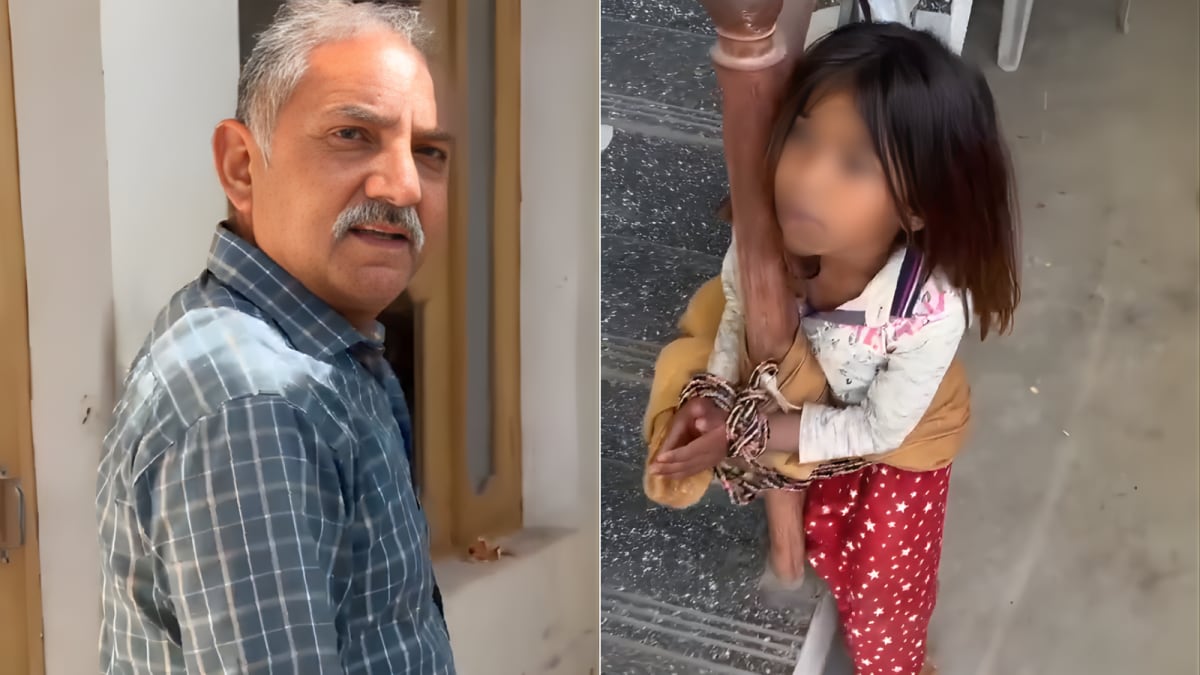
In a residential setting where children freely explore nearby spaces, it is not uncommon for a child to reach for a low‑hanging fruit. However, the alleged reaction of the retired army man after the four‑year‑old girl plucked a guava from his garden deviated dramatically from typical parental or caretaker responses. According to eyewitness accounts and the video evidence that later circulated, the retired army man confronted the four‑year‑old girl, subsequently restraining the child with a rope and administering physical violence inside his home.
Sequence of Events as Captured on Video
The viral video, which played a pivotal role in bringing the incident to public attention, begins with the sound of a child’s startled cry echoing through a courtyard. The four-year-old girl can be heard pleading in a trembling voice, “Uncle, mujhe bacha lo,” a plea that underscores both the fear and the desperation felt in that moment. The visual portion of the footage shows the retired army man securing the four-year-old girl’s wrists and ankles with a sturdy rope, leaving the child visibly distressed and unable to move freely.
Subsequent frames depict the retired army man dragging the restrained four-year-old girl into the interior of his house. Inside, the retired army man is seen striking the four-year-old girl repeatedly, while the child continues to vocalize cries for help. The intensity of the assault escalates as the four-year-old girl’s body language indicates mounting pain and terror.
Amidst the chaos, a passerby named Rohit Jaiswal, who was walking near the residence, becomes aware of the commotion. Hearing the four-year-old girl’s anguished pleas, Rohit Jaiswal stops, surveys the situation, and decides to intervene. Rohit Jaiswal enters the property, discovers the four-year-old girl bound and crying, and promptly records the unfolding scene with a handheld device.
Rohit Jaiswal’s quick actions lead to an immediate confrontation with the retired army man. Rohit Jaiswal demands the release of the four-year-old girl, calls for assistance, and contacts local authorities, including the police and the Child Helpline, to ensure that professional help arrives without delay.
Community Response and Viral Spread
Word of the incident spread rapidly through the village of Bahdala, galvanizing neighbors and onlookers who converged at the site of the alleged assault. The collective presence of villagers, combined with the visual evidence captured by Rohit Jaiswal, amplified the urgency of the situation. The restrained four-year-old girl was eventually freed from the rope, and immediate medical attention was arranged to assess any physical injuries sustained during the episode.
In the days that followed, the video recorded by Rohit Jaiswal found its way onto various social‑media platforms. As the clip circulated, netizens across the country expressed shock, anger, and a demand for accountability. The emotional resonance of the four‑year‑old girl’s plea, coupled with the stark visual of a child being bound and beaten, sparked a wave of commentary that called for swift justice and a broader conversation on child protection.
Online users crafted a multitude of reactions ranging from condemnations of the retired army man’s conduct to calls for systemic reforms. Some commenters suggested the imposition of severe penalties, while others debated the appropriateness of existing legal frameworks in addressing such cases. The discourse, while varied, consistently highlighted the community’s collective outrage and its desire for a decisive response from law‑enforcement agencies.
Official Intervention and Legal Measures
Following the surge in public attention, law‑enforcement officials in Una initiated an official inquiry. The police department received a formal complaint through the emergency helpline numbered 112, accompanied by the video evidence. After reviewing the footage, police officials confirmed that the incident warranted immediate action under relevant statutory provisions.
The retired army man was taken into custody by officers from the local police station. A formal case was registered under specific sections of the Bharatiya Nyaya Sanhita, which addresses offenses of assault, bodily harm, and the unlawful restraint of a minor. Additionally, the case was lodged under the Juvenile Justice Act, reflecting the involvement of a child victim and the need for protective measures prescribed for such circumstances.
Medical professionals examined the four-year-old girl to document any injuries and to provide necessary treatment. The investigation team, composed of senior police officials, continued to gather statements from Rohit Jaiswal, the four-year‑old girl’s guardians, and neighboring residents who witnessed the incident or heard the calls for help.
Authorities also liaised with the Child Helpline to ensure that the four‑year‑old girl received psychological counseling aimed at mitigating the trauma associated with the violent encounter. The combined efforts of the police, medical staff, and child‑welfare agencies underscore a coordinated approach to addressing both the immediate and longer‑term needs of the four‑year‑old girl.
Public Statements and Social Media Reaction
In the wake of the viral spread, the retired army man reportedly issued a public apology, expressing remorse for the alleged actions. The apology, however, was met with widespread skepticism and further condemnation across social platforms. Commentators highlighted that an apology without accountability does not sufficiently address the severity of the misconduct.
One user, channeling a sentiment of collective frustration, wrote, “People should have shaved his moustache and every time he grows it they should tie him up, chapaal him, and shave it again.” The comment, while hyperbolic, reflects the depth of public anger and the desire for punitive measures that extend beyond symbolic gestures.
Another commenter addressed governmental oversight by tagging officials and demanding concrete action: “He should be booked and his pension benefits should be revoked. This sorry doesn’t mean anything, @adgpi, will you please take lead here on this matter. Such a shame 🙏🏻.” The appeal for revoking pension benefits indicates a call for institutional repercussions that affect the retired army man’s livelihood.
Further reactions underscored the perception that the retired army man’s apology was motivated more by the fear of being caught than genuine contrition. A user observed, “He isn’t sorry for what he did, he is sorry he got caught! It is disgusting that you are trying to explain it away as ‘People can get angry over such things and it happens often…’.” This critique emphasizes the need for an unwavering stance against any form of child mistreatment.
Amid the heated dialogue, some users reflected on broader societal issues, noting the paradox of a country that produces abundant fruit yet allows a child to be punished for merely reaching out. One comment read, “If have given the kid more fruit and some money then explained not to steal and ask instead of breaking the law. India has become a giant joke like Israel.” Although the comparison is provocative, the underlying message stresses the importance of education and positive reinforcement over violence.
Finally, a user called for a precedent‑setting response, stating, “If that was the case… every criminal would apologize… this is not the punishment, this should be a message to every monster walking in the street treating small babies as some kind of toys…no way a punishment is sufficient.” The sentiment captures a collective yearning for a punitive example that deters future incidents of similar nature.
Legal Framework and Child Protection Context
The legal response to the incident invokes the Bharatiya Nyaya Sanhita, a codified set of statutes that encompass offenses ranging from assault to unlawful confinement. Under these provisions, the act of binding a child with rope and inflicting physical harm constitutes a criminal act that is punishable by law. The inclusion of the Juvenile Justice Act in the case register reflects the statutory mandate to protect minors from exploitation, abuse, and neglect.
According to the Juvenile Justice Act, any act that endangers the physical or mental health of a child triggers mandatory reporting, investigation, and protective measures. The Act also outlines the role of child welfare committees in ensuring that victims receive appropriate medical care, psychological counseling, and rehabilitation services. The intervention by the Child Helpline and subsequent medical assessment of the four‑year‑old girl align with these statutory obligations.
Furthermore, the involvement of a retired army man introduces a nuanced dimension to the legal discussion. While the retired status does not confer immunity from prosecution, it raises questions about the applicability of pension-related provisions in the event of a criminal conviction. The public’s demand for pension revocation suggests a societal expectation that state‑funded benefits be contingent upon lawful conduct.
In addition to punitive measures, the legal process also aims to deliver restorative outcomes for the four‑year‑old girl. The psychological counseling recommended by child‑welfare officials is intended to address potential long‑term trauma, while the medical documentation of injuries ensures that forensic evidence is preserved for judicial proceedings.
Ongoing Investigation and Anticipated Developments
At the time of this reporting, the investigation remains active. Police officials continue to interview witnesses, including the resident Rohit Jaiswal, who captured the video and alerted authorities. The statements of villagers who observed the retiree army man’s actions, as well as those of the four‑year‑old girl’s caregivers, are being compiled to construct a comprehensive narrative of the incident.
Forensic experts are reviewing the video footage to ascertain the precise timeline of events, the extent of physical injury inflicted upon the four‑year‑old girl, and any additional evidence that may support the prosecution’s case. The forensic analysis also includes an examination of the rope used for restraint to determine its origin and any potential forensic traces.
Legal counsel representing the retired army man has been apprised of the charges, and a formal court appearance is anticipated in accordance with procedural requirements. The judicial process will consider the evidentiary material, including medical reports, video documentation, and eyewitness testimonies, to arrive at a verdict that aligns with the statutory mandates of the Bharatiya Nyaya Sanhita and the Juvenile Justice Act.
Meanwhile, child‑protection NGOs have expressed readiness to offer additional support to the four‑year‑old girl and her family, emphasizing the importance of a safe environment for recovery. These organizations are also advocating for broader community education initiatives aimed at preventing similar occurrences in the future.
The case continues to serve as a catalyst for national conversation, prompting policymakers, law‑enforcement agencies, and civil society to re‑examine existing mechanisms for safeguarding children’s rights, especially in rural contexts where oversight may be limited.
Conclusion
The incident involving a retired army man, a four‑year‑old girl, and a rope in Una, Himachal Pradesh, has evolved from a localized dispute to a nationwide discourse on child safety, legal accountability, and societal responsibility. The swift response by a vigilant resident named Rohit Jaiswal, the rapid mobilization of police and child‑welfare services, and the viral dissemination of the video collectively illustrate the power of community vigilance and digital platforms in demanding justice.
As the legal process unfolds, the central focus remains on delivering justice for the four‑year‑old girl, ensuring her physical and emotional well‑being, and establishing a precedent that deters similar acts of violence against children. The story underscores the imperative for robust enforcement of child‑protection laws and the need for continued public awareness to safeguard the most vulnerable members of society.