The Botanist: A Whispering Meditation on Solitude
Solitude Film: The Botanist captures quiet resistance in China’s changing Xinjiang landscapes, offering a contemplative view of a lone individual’s choice to remain rooted amid accelerating change.
Solitude Film: The Botanist captures quiet resistance in China’s changing Xinjiang landscapes, offering a contemplative view of a lone individual’s choice to remain rooted amid accelerating change.
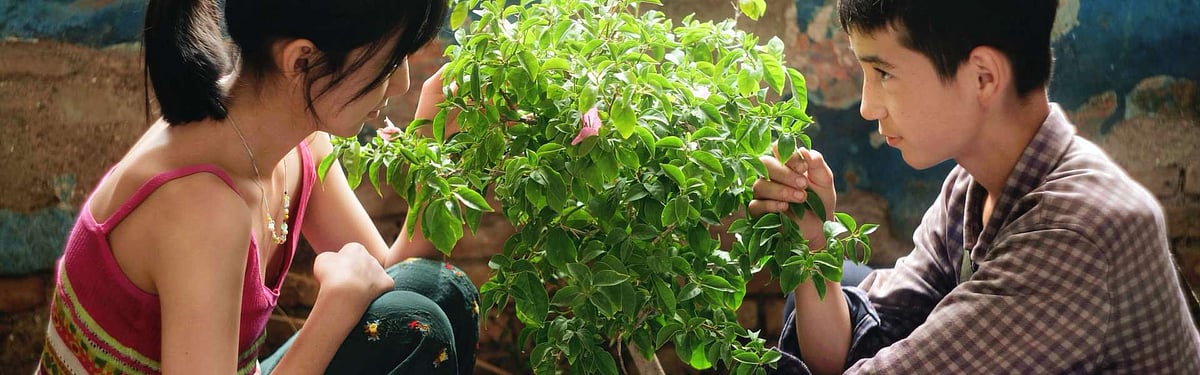
The Botanist stands apart as a film that whispers rather than shouts, immersing viewers in the melancholy of one man’s choice to stay behind while the world rushes forward.
The camera lingers on the rolling curvature of the hills, allowing the mist to drift like a living veil that both conceals and reveals the daily rhythm of the hamlet.
Set in a remote hilly hamlet in China’s Xinjiang region, The Botanist transforms the surrounding landscape into a living character. The ever‑present mist, the sparsely clustered homes, and the profound silence of the valley all act as resistance against the erasure that modernisation threatens.
Memory, in this context, becomes a tangible texture that the audience can feel, turning stone and shrub into vessels of collective recollection.
“The landscapes are not scenery but memory — holding time still while the world accelerates.”
This observation underscores how each ridge and each gust of wind carries the weight of generations that chose to remain rooted.
At the centre of The Botanist is Arsin, a man who chooses solitude over ambition. Arsin’s girlfriend departs for boarding school, Arsin’s uncle‑brother leaves for Beijing, yet Arsin remains in the hamlet. Arsin’s melancholy is dignified, Arsin’s silence is meditative. Arsin is not lonely but self‑contained, embodying the dignity of rootedness in a time of restless change.
Arsin’s daily routine consists of tending to a modest garden, collecting wild herbs, and walking the narrow paths that wind through the mist, each step reinforcing his bond with the land.
The sparse ensemble — just three or four characters — heightens intimacy. Each departure deepens Arsin’s solitude, yet Arsin resists the lure of development, preferring the company of silence and the hamlet itself.
The limited cast forces the viewer to focus on the nuances of each interaction, making every glance and every pause carry amplified significance.
Arsin’s refusal to migrate acts as a quiet protest against commodification. Arsin resists conversations about mining and development, choosing instead to live in meditative silence. Arsin’s solitude becomes strength, a way of preserving identity when progress threatens to erase it.
The metaphor of the dark horse galloping away in the final sequence remains unforgettable. The dark horse represents freedom, escape, and the unstoppable flow of time. Juxtaposed with Arsin’s aged face, the dark horse underscores the paradox of staying: endurance brings dignity, but also decay.
The darkness of the horse, silhouetted against a waning sky, amplifies the tension between movement and stasis, reminding the audience that change is relentless even for those who appear immovable.
“The dark horse does not promise hope — it reminds us that time gallops beyond our grasp.”
This line acts as a lyrical coda, reinforcing that the passage of time cannot be halted, only witnessed.
The background score is sparse, moody, and poignant. The music never overwhelms; instead it deepens the atmosphere. Silence itself becomes a narrative device, stretching across long sequences to mirror Arsin’s solitude. In these moments, The Botanist achieves its greatest intensity — not through action, but through stillness.
The sparse instrumentation, often reduced to a single piano note or a distant wind chime, allows the ambient sounds of the valley to fill the auditory space, turning emptiness into a resonant character.
Set against China’s changing times, The Botanist critiques the costs of modernisation. As cities thrive, hamlets empty; as economies grow, identities erode. Arsin’s choice to stay is both personal and cultural — a refusal to be swept away by urban ambition.
The film’s subtle indictment of rapid development invites viewers to question what is sacrificed when progress is measured solely in concrete and capital.
“In Arsin’s silence lies a protest — against erasure, against speed, against forgetting.”
This protest is rendered through visual poetry rather than explicit dialogue, allowing the audience to feel the weight of resistance.
The Botanist is a brilliant meditation on solitude, resistance, and the passage of time. It takes viewers inside a hilly hamlet, inside Arsin’s melancholy, and inside the crosscurrents of everyday existence. By the end, one realises that Arsin’s choice to stay is not about rejecting progress but about embracing presence.
The final sequence, where the camera rests on Arsin’s weathered hands clasping a small plant, crystallises the film’s central thesis: that true progress can be measured by the depth of one’s engagement with place.
The Botanist lingers long after the credits roll. It is a film that does not shout but whispers — and in its whisper lies its brilliance. Jing Yi’s direction & screenplay is deep and inescapably influential.
Jing Yi employs a restrained visual language, allowing long takes to breathe and allowing the audience to sit with the silence, thereby amplifying the thematic weight of the narrative.
Charudutta Panigrahi is a writer and a film enthusiast
Charudutta Panigrahi’s insight highlights how The Botanist transcends conventional storytelling, inviting contemplation rather than mere consumption.
Charudutta Panigrahi is a writer and a film enthusiast