TTP‑Linked Militants Assault NADRA Office in Bannu, Police Constable and Security Guard Fatally Wounded
A fierce exchange of gunfire erupted as TTP‑affiliated militants stormed the NADRA facility in Bannu, resulting in the deaths of police constable Rafiullah and private security guard Gul Shah Noor, while several others sustained injuries.
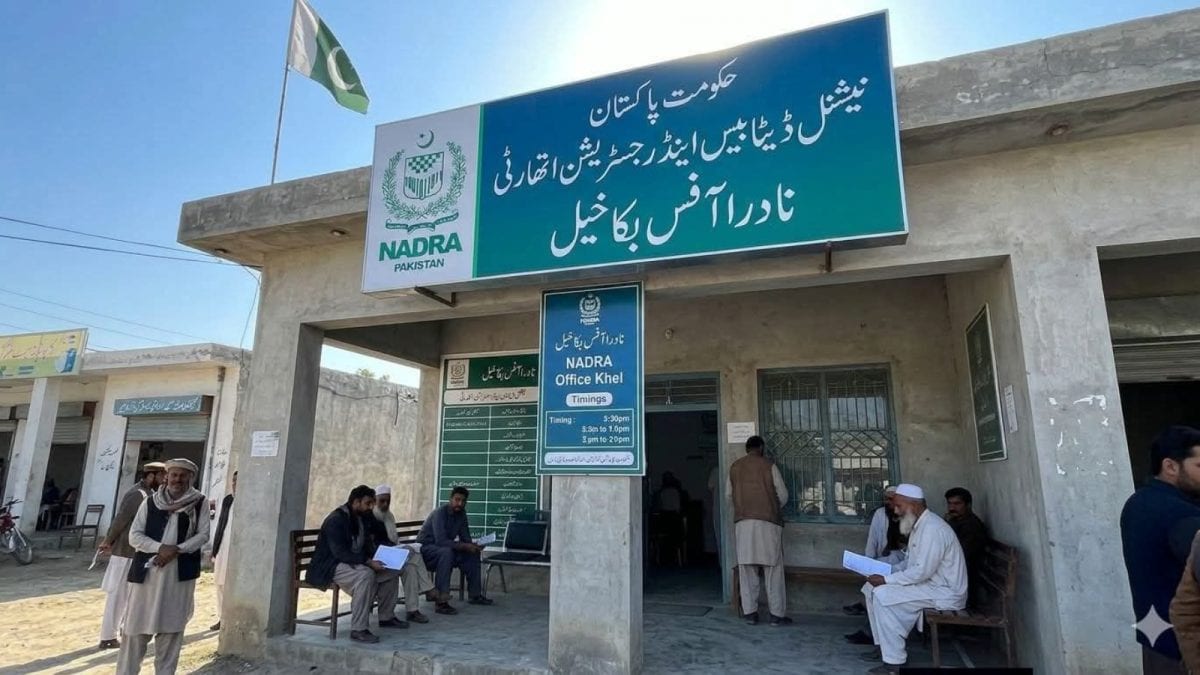
During the assault, a violent gunfight erupted between the assailants and security forces.
TTP‑affiliated militants mounted a coordinated strike on the National Database and Registration Authority (NADRA) office in Bannu, a critical government installation tasked with maintaining the registration records and sensitive personal data of every citizen of Pakistan. The attack resulted in the loss of two lives: police constable Rafiullah and private security guard Gul Shah Noor. In addition to the fatalities, a number of additional individuals suffered injuries of varying severity.
The National Database and Registration Authority (NADRA) office in Bannu functions as a hub for the collection, verification, and safeguarding of demographic information, identity documents, and biometric data. The strategic importance of this facility makes it a high‑value target for groups seeking to disrupt governmental operations, compromise citizen data, or convey a message of defiance against state authority.
According to multiple sources, the TTP‑affiliated militants entered the premises armed with automatic weapons and proceeded to open fire on the security personnel stationed at the site. The ensuing gun battle between the assailants and the defending forces intensified rapidly, with both sides exchanging heavy gunfire for an extended period.
Police constable Rafiullah, who was on duty at the National Database and Registration Authority (NADRA) office in Bannu at the time of the incident, sustained fatal injuries during the clash. Private security guard Gul Shah Noor, assigned to protect the facility, also succumbed to wounds inflicted by the gunfire. Their sacrifice was prominently highlighted by officials and community members as a poignant reminder of the personal cost of defending public institutions.
In addition to the two deceased, several other individuals were reported to have been injured. The injuries ranged from minor bruises to more serious wounds that required medical attention. The exact number of injured persons was not disclosed, but the impact of the attack was felt across the staff, visitors, and surrounding community.
Analysts note that the assault on the National Database and Registration Authority (NADRA) office in Bannu is part of a broader pattern of high‑impact attacks targeting government facilities in semi‑urban and rural locales. Sources indicate that militant organizations such as Tehreek‑e‑Taliban Pakistan (TTP), Islamic State Khorasan Province (ISKP), and various Baloch insurgent groups are simultaneously active across the provinces of Khyber Pakhtunkhwa and Balochistan. The concurrent operations of these groups have placed considerable strain on security forces, exposing vulnerabilities within the nation’s counter‑terrorism framework.
The pattern of attacks on critical infrastructure, including police stations, security convoys, and other National Database and Registration Authority (NADRA) offices, has been interpreted by observers as evidence of a diminishing state presence in certain regions. The recurring nature of surprise assaults, coupled with allegations of insider facilitation and delayed response times, underscores perceived deficiencies in local intelligence networks and inter‑agency coordination.
Security experts emphasize that the successful penetration of a facility as secure as the National Database and Registration Authority (NADRA) office in Bannu reveals gaps in the protective measures surrounding essential state assets. The loss of police constable Rafiullah and private security guard Gul Shah Noor underscores the perils faced by frontline personnel who are tasked with safeguarding national institutions against determined militant adversaries.
Interior Minister Mohsin Naqvi publicly condemned the assault and expressed profound sorrow over the casualties. In a formal statement, Interior Minister Mohsin Naqvi described the deaths of Guard Gul Shah Noor and Constable Rafiullah as the highest honour of martyrdom achieved while performing their duties. Interior Minister Mohsin Naqvi highlighted the bravery demonstrated by Guard Gul Shah Noor and Constable Rafiullah, stating that their self‑sacrifice sets a remarkable example of courage and dedication for all security personnel.
The response of Interior Minister Mohsin Naqvi included a call for intensified security measures around all critical government installations. Interior Minister Mohsin Naqvi urged law‑enforcement agencies to reinforce intelligence gathering, accelerate investigative processes, and enhance coordination among the various branches responsible for public safety.
Community leaders and local residents expressed grief over the loss of Guard Gul Shah Noor and Constable Rafiullah, describing them as heroes who gave their lives in the line of duty. Public vigils were held at the National Database and Registration Authority (NADRA) office in Bannu, where citizens gathered to pay their respects and to reaffirm their resolve against extremist violence.
The aftermath of the attack saw an increased presence of security personnel around the National Database and Registration Authority (NADRA) office in Bannu, as authorities sought to restore a sense of safety and to deter any further attempts at disruption. Additional patrols and checkpoints were established in the surrounding neighborhoods to monitor any suspicious activity and to provide rapid response capabilities.
While the immediate tactical objectives of the TTP‑affiliated militants were not disclosed, the broader strategic implications of striking a facility like the National Database and Registration Authority (NADRA) office in Bannu are evident. By targeting a repository of citizen data, the attackers aim to erode public confidence in state institutions, to create a climate of fear, and to demonstrate their operational reach.
In the wake of the incident, law‑enforcement officials reiterated the necessity of fortifying critical infrastructure against future assaults. Emphasis was placed on the importance of robust perimeter security, systematic threat assessments, and continuous training for personnel such as Guard Gul Shah Noor and Constable Rafiullah, whose ultimate sacrifice serves as a stark reminder of the dangers inherent to protecting public assets.
Experts also highlighted the role of community cooperation in counter‑terrorism efforts. The participation of local citizens in reporting suspicious behaviour, supporting investigative initiatives, and fostering an environment of vigilance is deemed essential for preventing similar attacks on facilities like the National Database and Registration Authority (NADRA) office in Bannu.
The incident at the National Database and Registration Authority (NADRA) office in Bannu has intensified discussions regarding the allocation of resources to rural and semi‑urban security outposts. Policymakers are urged to examine the distribution of intelligence assets, the effectiveness of rapid‑deployment units, and the integration of technology‑driven surveillance tools to preempt and neutralize threats posed by TTP‑affiliated militants and affiliated groups.
As the nation reflects on the loss of Guard Gul Shah Noor and Constable Rafiullah, the collective resolve to confront extremist violence remains steadfast. The narrative of sacrifice and dedication embodied by Guard Gul Shah Noor and Constable Rafiullah continues to inspire ongoing efforts to safeguard the nation’s democratic institutions and the safety of its people.