Batter Hospitalised, Match Abandoned: Antigua Pitch Puts West Indies Cricket in the Dock
A dangerous delivery on an unfit Antigua pitch left Leeward Islands batter Jeremiah Louis hospitalised and the West Indies Championship match against Trinidad and Tobago abandoned as a draw.
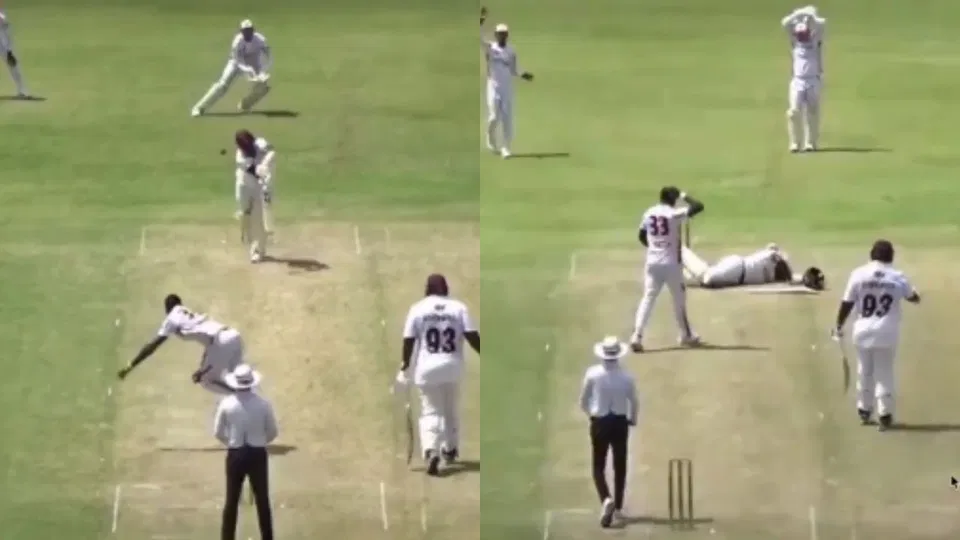
Nobody walks onto a cricket field expecting to leave in an ambulance. On the third morning of the West Indies Championship clash at the Sir Vivian Richards Stadium in Antigua, that is exactly what happened.
Leeward Islands batter Jeremiah Louis was struck on the helmet by a delivery from fast bowler Jayden Seales. The ball reared sharply from a good length on a pitch that had been drawing complaints for three days. Louis dropped to the ground. Medical staff rushed onto the field. He was stretchered off the ground and taken to hospital by ambulance. Shortly after, the match between Leeward Islands and Trinidad and Tobago was abandoned entirely.
Cricket West Indies confirmed the pitch was unfit for play. The match was declared a draw. Both teams share the points. But the conversation this has forced is far bigger than any domestic points table, and it will not be resolved by a statement and a scoreline.
A Pitch That Should Never Have Reached Day Three
The Antigua surface had been a problem from the very first session. Players and coaches flagged its uneven bounce and unpredictable behaviour well before Thursday morning. Deliveries from a good length were rearing to chest and head height without warning, with no consistent pattern for batters to read or adjust to. On a pitch like that, technique counts for very little. It becomes a lottery. On this occasion, the lottery produced its worst possible result.
At the time of the incident, Leeward Islands held a lead of 96 runs. Louis, after recovering his footing, reacted the way any cricketer might after facing genuine danger. He kicked his helmet and struck the pitch surface before being helped away by the medical staff. It was not a tantrum. It was the reaction of a man who had just processed, in real time, exactly how close things had come.
Leeward Islands coach Wilden Cornwall was direct when speaking to reporters afterward. “To me, it wasn't given the preparation of a four-day wicket, hence we see so many players get damaged. The pitch has been misbehaving throughout the entire three days.”
That word, damaged, is the one that stays with you longest. Not inconvenienced. Not troubled. Damaged.
The Name Nobody Wanted to Say Out Loud
When a batter is struck on the helmet and collapses, one name surfaces in every cricket dressing room before anyone says it aloud. Phil Hughes.
The Australian batter passed away in November 2014 after being struck on the neck by a delivery during a Sheffield Shield match in Sydney. He was 25 years old. His death changed cricket in ways that are still being felt: helmet standards were completely overhauled, on-field protocols were revised, and the conversation around pitch safety and player welfare was supposed to have shifted permanently.
Jeremiah Louis is stable. He has not, based on current reports, suffered serious long-term harm. That is the only result that genuinely matters this week, and it is the relief the entire cricket community needed. But the fact that this conversation is happening at all, in 2026, on a pitch that officials themselves subsequently declared unfit, raises an uncomfortable and unavoidable question about how much has actually changed since that day in Sydney.
What Cricket West Indies Said
The official statement from Cricket West Indies was clear on the facts if deliberate with its language. “Following discussions with the curator, it was determined that the pitch could not be safely repaired without creating an unfair advantage and was therefore deemed unfit to resume, resulting in the match being abandoned as a draw.”
Read that again slowly. The pitch could not be safely repaired. Which means it was unsafe before the abandonment. Which means the match should not have continued as far as it did before this call was made.
The West Indies Championship is the Caribbean's flagship first class competition. The Sir Vivian Richards Stadium is not a remote venue operating without resources. If a pitch at this level, in this stadium, can deteriorate to this condition without triggering an earlier intervention from match officials, the problem is not limited to the surface itself. It extends to the inspection process that allowed play to continue across three days.
What Needs to Change
Both teams leave Antigua with shared points. Jeremiah Louis leaves with his health, which is the result that matters most. But Caribbean domestic cricket has a longer-term problem that a draw and a press release will not fix.
A full review of what happened in Antigua is the minimum response. That review should cover how this pitch was cleared for a four-day Championship match, what monitoring took place across the three days of play, and what the threshold is for match officials to intervene before a player is injured rather than after. Not as a punishment. As a process that should have existed already.
Player safety is not a talking point. It is not a section of a post-match statement. It is the floor beneath which no game of cricket, at any level, in any country, should be allowed to fall. The question now is whether the administrators of Caribbean domestic cricket are prepared to treat it that way.
What changes would you want to see in pitch inspection protocols after what happened in Antigua?