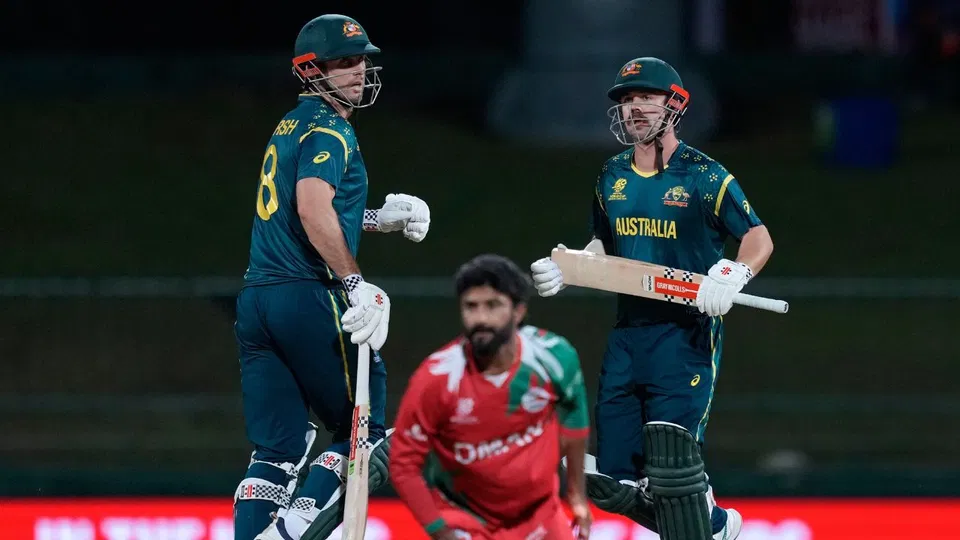
Puducherry in September. Spin Drills and Sweat and Soil. Australia A Are Going Back to India.
Australia A men will tour India from September 22 to October 11 for two four day matches and three one dayers, all in Puducherry, the BCCI confirmed on Thursday. The tour is a deliberate preparation exercise for the five Test Border-Gavaskar Trophy in January 2027, a series Australia have not won in more than two decades.

The last time Australia won a Test series in India, it was 2004. That is not a recent historical footnote. It is a generational gap. Two decades of Australian cricketers have toured the subcontinent, adapted to the heat, sweated through the spinning surfaces, and come home empty handed. The series beginning in January 2027 will be the next attempt. The preparation for it starts in Puducherry in September.
The BCCI confirmed on Thursday that the Australia A men's side will return to India for a series against India A featuring two four day matches and three one day games, all hosted in the southern Indian city of Puducherry. The schedule runs from September 22 to October 11. The timing is deliberate. The venue is deliberate. Almost nothing about this tour is accidental.
Why Puducherry and Why Now
Puducherry sits roughly 160 kilometres south of Chennai. Chennai is where Australia will play the second of next year's five Border-Gavaskar Trophy Tests. The proximity is not coincidental. Players who spend three weeks training and competing in the region in September will arrive in January with at least some memory of how the air feels, how the pitches behave, what the heat does to concentration across a four day match, and how to manage their body in conditions that punish under preparation more than any other touring environment in world cricket.
Last year's A tour, which took the squad to Kanpur and Lucknow, delivered exactly this kind of accumulated knowledge. Australia A coach Tim Paine spoke at length after that campaign about what players learned that no training camp could replicate. He pointed to Campbell Kellaway learning about energy conservation after exhausting himself in training before a match. He pointed to Todd Murphy working out how to grip the ball when his hands were soaked in sweat. He pointed to players returning from India with a working understanding of the difference between red soil and black soil pitches, two surfaces that produce entirely different conditions and require different technical and tactical responses.
As Paine put it plainly: “Chatting to guys before we came over, they had no idea that there were two different types of clays in India. We've been coming here as a cricketing nation for a long, long time and if we're totally honest, the results over that period haven't got a hell of a lot better, have they?” The A tour exists to start changing that.
The Schedule and What It Asks
Two four day matches: September 22 to 25 and September 29 to October 2. Three one day games: October 6, 9 and 11. All five matches in Puducherry. The format is more red ball focused than last year's campaign, which itself reflected the primary purpose of the tour. This is not white ball preparation. This is about giving Test candidates extended time at the crease and with the ball on subcontinental surfaces before the real thing begins in January.
The timing creates an interesting logistical tension. The tour overlaps with the start of Australia's domestic season and runs concurrently with their ODI series in Zimbabwe and South Africa. That means selectors face a sequencing decision: Test specialists could feasibly feature in the first four day game in Puducherry before travelling to South Africa for the series opening Test in Durban on October 9. Whether that double commitment becomes a feature of the selection planning or a complication to be managed will depend on squad depth and individual workload assessments.
Australia's Under 19 men face their Indian counterparts from September 18 to October 8 across Rajkot and Ahmedabad. An all format Australia A Women's series runs from September 12 to October 2 across Mohali and Dharamshala. The programme is substantial. The BCCI and Cricket Australia are running three separate tours through the same window, each serving a different development purpose, each playing into a longer pipeline that points toward the summer of 2027.
What the 2027 Series Means and Why the Gap Matters
The five Test Border-Gavaskar Trophy is expected to begin in mid to late January. Australia are scheduled to play ten Tests across a fourteen week window between December and March, making it one of the most demanding stretches of red ball cricket any Australian side has faced in the modern era. The India tour sits at the heart of that stretch, not just as five matches but as the series most likely to define how the 2026-27 season is remembered.
For Pat Cummins, Steve Smith, Mitchell Starc, Josh Hazlewood and Nathan Lyon, the 2027 tour represents something specific. None of them have won a Test series in India. They have toured it, played well in parts of it, won individual matches in it, but have not come home with the series. The A tour will not feature all of them. But some may play at least the first four day game before heading to South Africa. And the players who do make the full A trip will carry whatever they learn directly into the Test squad conversations that follow.
Cricket Australia has already flagged its awareness of the workload demands ahead. The decision to rest Starc, Cummins and Hazlewood from the early rounds of the IPL was described as a deliberate signal about managing the trio to the finish line of the 2026-27 season. The A tour to India is another piece of the same planning logic: get the right players into the right conditions as early as possible so that January does not feel like an arrival for the first time.
What Last Year Proved
The 2025 A tour produced immediate returns. Players who went through that campaign arrived better prepared for the Test environment in India than comparable Australian squads had been in recent years. Sam Konstas, Campbell Kellaway, Cooper Connolly, Xavier Bartlett and Murphy all came back from Kanpur and Lucknow with something they had not carried before: specific, physical, ground level knowledge of what subcontinental cricket demands from a touring side.
Whether that knowledge translates into a series win in 2027 depends on factors that no A tour can guarantee. Indian pitches do not become easier because Australian players have visited before. Indian batters do not become less dangerous because Australian spinners have spent three weeks trying to grip a sweating ball in September heat. But preparation reduces the number of variables that surprise you. And fewer surprises, in a five Test series in India that Australia have not won since 2004, is exactly what the coaching staff are trying to engineer.
Puducherry in September. The Border-Gavaskar Trophy in January. The gap between them is the opportunity Australia are trying not to waste.
Does touring India twice in consecutive years finally give Australia the preparation edge they need to end a twenty year wait, or does the 2027 series arrive with the same questions this squad has never found answers to in the subcontinent?