One Last Ball at Wankhede. One Meeting After It. Now England Could Be Coming to Kirtipur.
The ECB has begun preliminary work on scheduling a short T20I series in Nepal as part of the 2027 to 2031 Future Tours Programme. The development follows a post-match conversation between CAN secretary Paras Khadka and ECB officials in Mumbai after England beat Nepal by four runs on the final ball of their T20 World Cup group stage match in February. A two or 3 match T20I series is under discussion, potentially timed around England's tour of India.
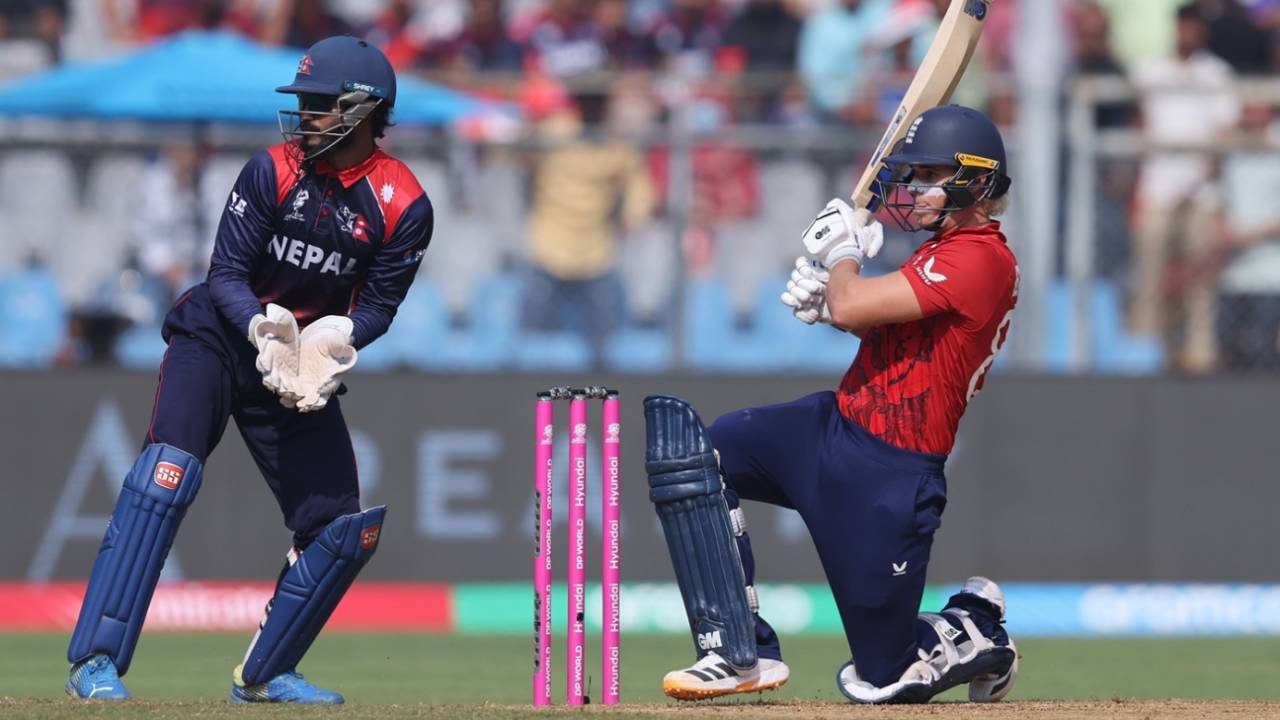
It came down to the last ball. Sam Curran defending ten runs in the final over at the Wankhede Stadium in Mumbai. Lokesh Bam needing six off one to tie, four to win. Curran held his nerve. England won by four runs. Nepal walked off with something that mattered more than the result: proof, in front of a full house in Mumbai, that they belonged on that stage.
What happened after the game mattered almost as much. Paras Khadka, now serving as secretary of the Cricket Association of Nepal, sought out ECB officials in India. The conversation was about something bigger than a single World Cup match. It was about whether England would be willing to come to Nepal. To Kathmandu. To the Tribhuvan University International Cricket Ground in Kirtipur. To play cricket on Nepali soil, in front of Nepali fans, as bilateral partners rather than tournament opponents.
Three months on from that meeting, the ECB has begun preliminary work on scheduling a short T20I series in Nepal as part of the 2027 to 2031 Future Tours Programme. A two or 3 match series is under consideration. The timing most discussed internally is around England's next tour of India, which gives the logistics a natural framework: fly in from the subcontinent, play in Kathmandu, continue. Nothing is confirmed. Nothing has been signed. But the direction of travel is clearer than it has ever been, and the people at the Cricket Association of Nepal know it.
What Nepal Have Built and Why It Matters
The case for England touring Nepal rests on what Nepal have become over the past five years, not on where they started. They became an ICC associate member in 1996. The board was suspended by the ICC in 2016 over government interference and the suspension was not lifted until 2019. The three years of suspension set back infrastructure, development pathways, and the central contract system at exactly the moment when the core of what is now the senior squad was learning the game at junior level.
That they are where they are now, despite that setback, is a credit to a generation of players who treated obstacles as problems to be solved rather than reasons to stop. Rohit Paudel, now 23 and the established captain of the senior side, made his debut when he was 16. Sandeep Lamichhane has played in the IPL, the Big Bash League, and the Caribbean Premier League, the only player from the Himalayan region to have featured in all three of those leagues. Dipendra Singh Airee, Karan KC, Kushal Bhurtel and Aasif Sheikh form a core that has competed and won at ICC tournament level against sides with far more resources.
The result that changed the external perception most sharply was not the near miss against England in February. It was the series win against the West Indies in the UAE in 2025, the first time Nepal had beaten an ICC Full Member nation in a bilateral series. Beating a Test playing country is a different category of result from competing well in a World Cup group stage. It is the kind of win that forces bilateral conversations that would not otherwise happen, and it happened at exactly the moment Nepal's infrastructure was reaching a level that could support high profile hosting.
The Venue and What Hosting England Would Mean
The Tribhuvan University International Cricket Ground in Kirtipur is the home of Nepali cricket and, for now, the only venue in the country capable of hosting international fixtures to the standard a touring Full Member would require. That standard has been rising. Floodlights were installed at the ground before the Nepal Premier League, and Nepal hosted their first ever international cricket encounter under lights in April this year when they faced the UAE in a 2 match T20I series. The infrastructure, while not yet comparable to an established Test nation, is developing with intent rather than waiting for external investment to arrive.
CAN president Chatur Bahadur Chand set out his vision publicly during the T20 World Cup: 5 stadiums by 2030 and at least 1 more by next year. Central contracts are already in place, with top cricketers paid a monthly salary alongside match fees. The Nepal Premier League, now in its third edition, has been widely credited as one of the better organised associate leagues in world cricket, notable specifically because its eight franchise owners are all Nepali investors rather than the overseas money that has driven similar competitions elsewhere.
England arriving in Kirtipur would be the biggest touring side in Nepal's cricket history. The question of what that does for the domestic game, for the visibility of cricket among a population of over 30 million people, for the generation of young players watching from stadiums and screens, is not a question that requires much analysis. Paudel himself said it directly during the World Cup: tours from big nations to Nepal would help in the globalisation of cricket. He was not speaking abstractly. He was making an argument about why a tour makes sense for both sides, not just for Nepal.
The FTP Window and the England Angle
The ECB is currently mapping out its 2027 to 2031 Future Tours Programme, the scheduling framework that determines which Full Members tour each other and when. The Nepal option is being considered within that window as a short addition, likely two or three T20Is, that would not displace any existing bilateral commitment but could be inserted around a larger tour.
The most natural fit is England's next Test tour of India, expected within the 2027 to 2031 cycle. The geographical proximity of Nepal to India makes a tacked on T20I series logistically straightforward in a way it would not be if England were touring the Caribbean or South Africa. Two or three T20Is in Kathmandu between arriving on the subcontinent and travelling to the Test venues is a realistic addition to an existing schedule rather than a standalone commitment that requires a separate planning effort.
Cricket Ireland's involvement gives the picture additional context. Ireland has already signed a 5 year strategic partnership with CAN and is planning to tour Nepal for a white ball series in the winter of 2026 to 2027. Ireland's presence in Kathmandu before England would help establish the hosting logistics, give CAN experience of managing a Full Member tour on their soil, and create a reference point that the ECB can point to when finalising their own decision. Ireland touring first is not a requirement for England to follow. But it helps the case.
What Khadka Started and Where It Could Lead
Paras Khadka retired from playing in 2019 as Nepal's most capped and most celebrated cricketer. He moved into administration at CAN with the same intent he had always brought to the game on the field. The conversation he initiated with ECB officials in Mumbai in February was not a casual exchange. It was a deliberate approach, timed for a moment when England had just played Nepal and beaten them by the narrowest of margins, when the quality of what Nepal could produce at the highest level had been visible to everyone in the stadium and watching on broadcast.
Khadka understood the moment. A 180 run chase that went to the final delivery, Harry Brook's 53 and Jacob Bethell's 55 needed before England could defend a target of 184, is not the kind of performance that allows a touring side to dismiss the opposition as a mismatch. England knew what Nepal could do. Khadka asked them to come and see it on Nepal's terms, in Nepal's conditions, in front of Nepal's crowd. The ECB is working out how to say yes.
The 2027 to 2031 FTP is not yet published. The Nepal option remains preliminary. But the fact that it is being weighed at all is a measure of how far this associate nation has come from the years of suspension and uncertainty that preceded the current generation of players.
Does an England tour of Nepal in the next FTP cycle represent the next step in the globalisation of cricket, or does the infrastructure gap between associate and Full Member cricket still make it a bridge too far for a maiden bilateral series?